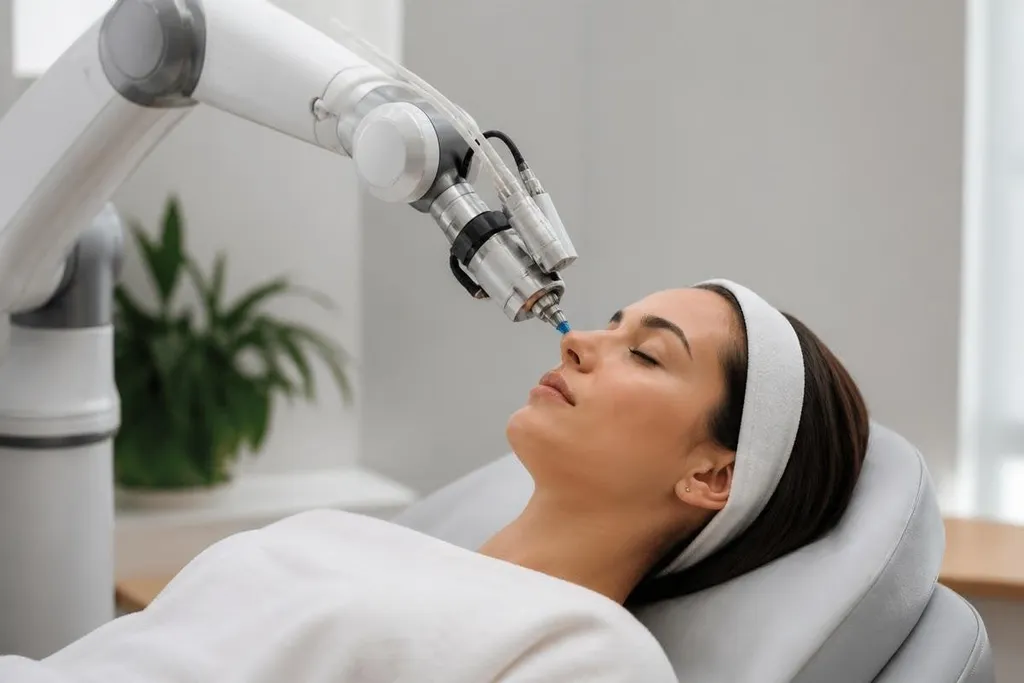
A robot working on skin, hair, or nails has to control force and distance within a very small space. That changes personal care from a task guided by touch into one guided by sensors, software, and repeatable motion.
This overview explains where that shift can happen, what the robot must measure, and why safety still sets the pace. Without a named product or trial record, the claims here describe the technology rather than market results.
- Small movements matter because skin and nails give little room for error.
- Cameras can check position, while force sensors can limit pressure.
- A useful system must handle movement, choice, cleaning, and consent.
Where robots fit
Personal care has several tasks with clear physical steps.
The arm could hold a brush, applicator, file, or hair tool while software sets the path and speed. The person still defines the service, and the robot carries out a repeatable part of it.
Nail care shows why this area needs careful control. A coating tool must stay inside the nail edge, keep a steady angle, and stop when the finger moves. A fixed workstation can reduce some movement, yet hands differ in size, shape, and position.
Skin care brings another problem. The surface shifts across the face, and a person may react to pressure, heat, or a product. A camera can find facial features, while a force sensor measures contact. Those readings give the control software a reason to slow down or stop.
Hair tools face loose strands and changing shapes. Moving a dryer or styling tool requires a clear path around ears, eyes, and skin. A comb or gripper also needs enough contact to move hair without pulling it.
The sensing problem
The robot needs more than a camera. Vision can show where a hand, face, or strand sits, but it may miss pressure and heat. Force sensors add contact data, while temperature sensors can watch the tool or nearby skin.
This is where personal care differs from many factory tasks. A part on a production line usually stays in a known place. A person shifts, speaks, flinches, and changes their mind. The control system has to read those changes and stop in time.
That stop must also be easy for the person to trigger. A physical stop button, a clear hand signal, or a voice command can end motion. The exact setup depends on the tool, the task, and the distance between the robot and the body.
For a beauty robot, the useful record includes the tool, pressure, movement, task, and person’s control. Robot24.com can connect those details with the businesses and machines behind the system, leading to the changes a person feels during the treatment.
What changes for the person
The system may make the same motion each time, yet repeatability alone doesn't make a service good. It needs a way to set preferences such as tool type, pressure limit, treatment area, and stop points.
That record also raises a privacy issue. A skin-imaging system may collect facial images or measurements. The owner needs to know what the system stores, how long it keeps the data, and who can access it.
Cleaning adds a physical task that software can't wish away. Any tool touching skin, hair, or nails needs a cleaning method suited to its material and use. Removable parts may help, but they also add steps for staff or the person using the system.
I’d judge a beauty robot by its stop behavior and cleaning process before its motion speed.
Where the limits remain
The hardest cases are the ones that change during the task. A person may move a hand, turn their head, or ask for a different result. A system trained for one pose can need a new plan when that pose shifts.
Product choice creates another limit. Hair thickness, skin sensitivity, nail shape, and treatment goals vary widely. Set rules can follow a narrow service, yet they may not suit all personal care.
The price also includes setup, cleaning, software checks, staff training, and repairs. A cheaper arm can cost more to run if each session needs manual adjustment. A public demo does not show those costs.
A practical buying checklist
Before you assess a personal-care robot, check these points:
- Define the task: name the exact motion the robot will perform.
- Check contact limits: find the force, heat, and speed limits near skin.
- Test movement changes: see what happens when the person shifts position.
- Review data handling: ask whether images or body measurements are stored.
- Inspect cleaning steps: count the parts that staff must clean or replace.
- Price the full setup: include tools, training, service, and software fees.
The next useful proof will come from named systems running repeated sessions with different people, clear stop tests, and published cleaning steps. Until those records exist, beauty robots are best judged as controlled tools for narrow services, not as replacements for personal-care workers.